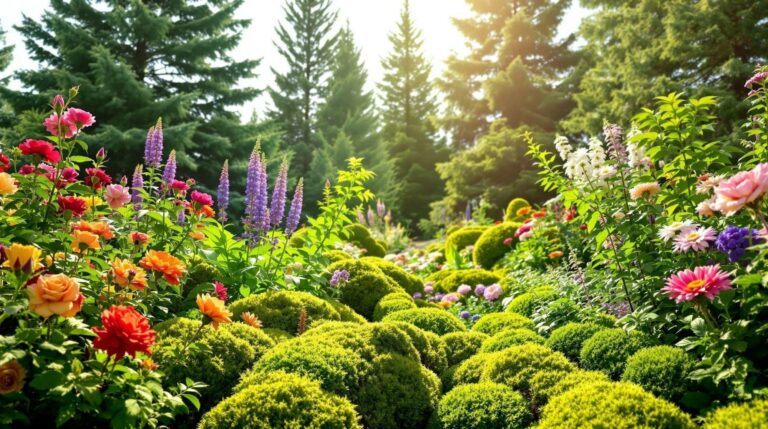
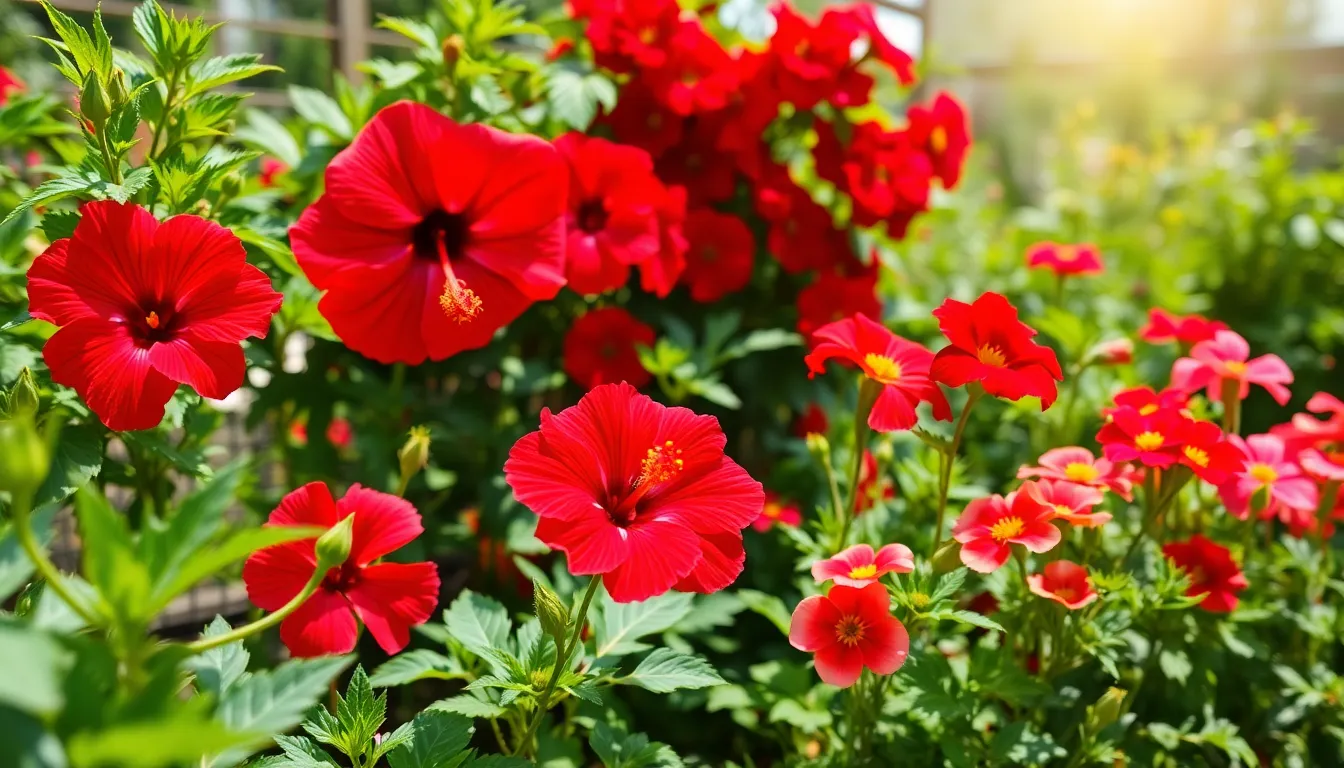

When it comes to adding a splash of color to any garden, red flowers steal the show. These vibrant beauties not only brighten up the landscape but also attract attention like a celebrity at a coffee shop. Imagine strolling through your garden, greeted by the fiery hues of red blooms that scream, “Look at me!”
From the bold poppies to the charming geraniums, red-flowered plants can transform any dull corner into a stunning visual feast. They’re like the life of the party—bringing energy and excitement wherever they grow. So, if you’re ready to turn your garden into a dazzling display of color, dive into the world of plants with red flowers and discover how they can elevate your outdoor space to new heights.
Plants With Red Flowers
Red flowers capture attention and inspire admiration in gardens. Their striking appearance makes them popular choices for landscape design. These blooms can serve as focal points, drawing the eye and enhancing visual appeal.
Poppies, known for their vibrant red hues, bloom in spring and early summer. They thrive in full sun and well-drained soil, offering a cheerful burst of color. Geraniums also provide eye-catching red flowers that bloom from spring to frost. These hardy plants adapt well to various conditions, making them versatile for container gardens.
Hibiscus showcases large, tropical red flowers that create a bold statement. These plants thrive in warm climates and need plenty of sunlight. Another option, the red hot poker, presents unique red and orange flower spikes. This drought-tolerant perennial attracts hummingbirds, adding life to any garden space.
Petunias add volume and color, with many varieties featuring crimson blooms. They bloom profusely throughout the growing season, flouring hanging baskets and garden beds. Additionally, the flame-colored amaranthus displays cascading red flowers, making it ideal for adding dramatic flair.
Texas sage, with its striking red blossoms, thrives in arid conditions while delivering stunning color during the summer. This shrub works well in xeriscape gardens, where water conservation is a priority.
Many options exist for gardeners looking to introduce red flowers into their landscapes. Each of these plants contributes unique textures, heights, and seasonal interests, ensuring a vibrant and diverse garden environment.
Types of Plants With Red Flowers
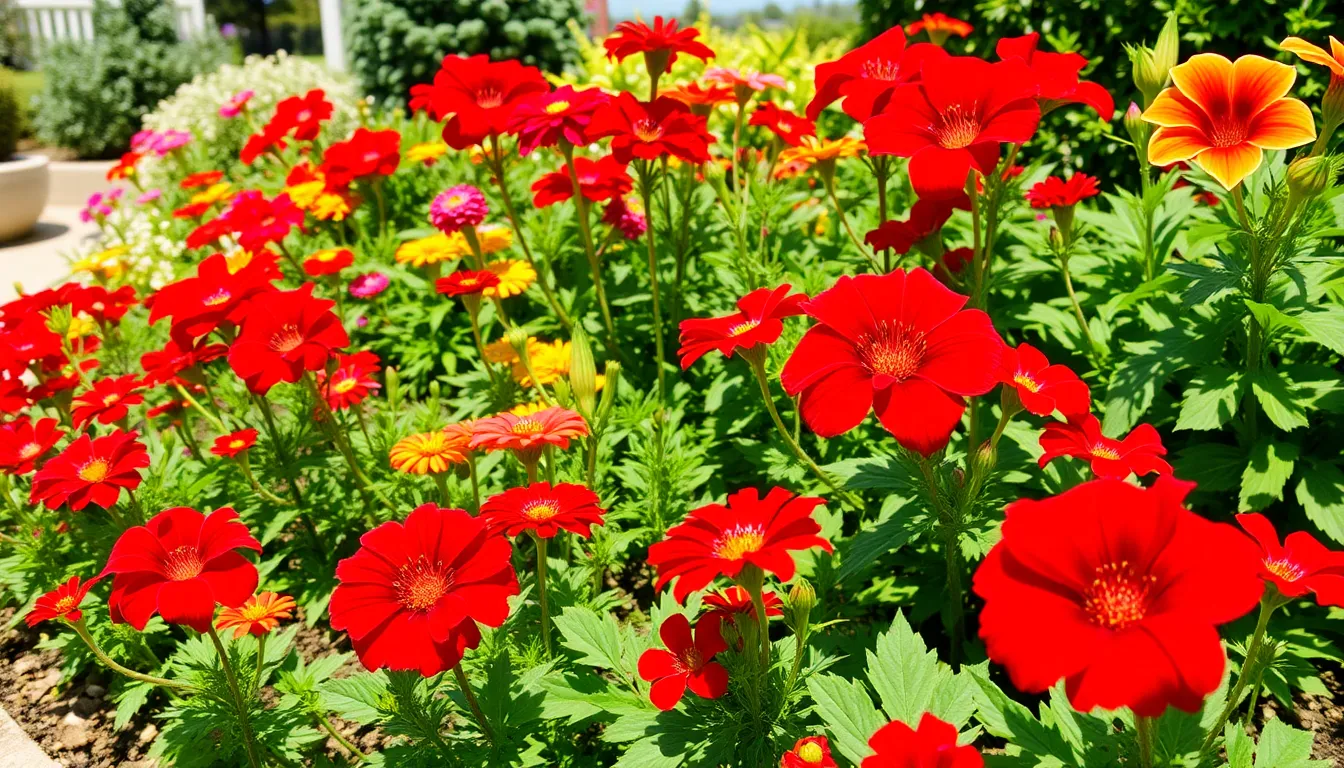
Several types of plants boast striking red flowers, each contributing unique beauty to garden spaces. Annuals, perennials, and shrubs represent the primary categories of these vibrant blooms.
Annuals
Annual plants thrive for a single growing season, making them a popular choice for quick seasonal color. They often feature bright red flowers, such as red geraniums, known for their cheerful presence in containers and borders. Another option, zinnias, provide long-lasting blooms and continuous color throughout summer. Amaranthus adds an exotic touch, with its unique red plumes creating visual interest. These annuals excel in sunny spots, needing full sunlight for optimal growth and flowering.
Perennials
Perennials return year after year, providing stability and consistent color in gardens. Daylilies, particularly the red varieties, bring bold hues that stand out among other plants. Another perennial option is red hot poker, known for its striking, torch-like blooms that attract hummingbirds. Bee balm, with its vibrant red flowers, invites beneficial pollinators, enhancing garden health. These plants typically prefer well-drained soil and can thrive in various sunlight conditions, from full sun to partial shade.
Shrubs
Shrubs with red flowers offer a more permanent solution for garden design and greater structural interest. Hibiscus stands out with its large, eye-catching red blooms that create a tropical atmosphere. Photinia, known for its bright red young leaves and white flowers, adds seasonal variation. Another excellent candidate, barberry, produces small yellow flowers with red berries that provide color and interest throughout the year. These shrubs typically require regular pruning and well-drained soil to thrive, making them valuable additions to any landscape.
Popular Examples of Plants With Red Flowers
Numerous plants showcase striking red flowers, making them favorites amongst gardeners. Below are detailed descriptions of some popular red-flowered species.
Roses
Roses are renowned for their classic beauty and come in various shades of red. These flowers symbolize love and passion, often used in bouquets and garden displays. Hybrid tea roses, for instance, produce large, stunning blooms suitable for cutting. Climbing roses, on the other hand, provide vertical interest on trellises and arbors. During the blooming season, they attract pollinators such as bees. Proper care includes well-drained soil and regular pruning, ensuring these plants thrive.
Poppies
Poppies stand out with their delicate, silky petals and vibrant red hues. Commonly found in meadows and gardens, these annuals prefer sunny locations with well-drained soil. The California poppy and Oriental poppy are two popular varieties, both known for attracting butterflies. Their blooms often create a beautiful contrast against green foliage. Regular watering supports healthy growth, but they handle drought well once established.
Hibiscus
Hibiscus plants are notable for their large, showy flowers, typically found in shades of red. These tropical beauties create an exotic feel in any garden. Varieties like the hardy hibiscus thrive in various climates, offering bold color and texture. Cultivating hibiscus requires full sun and moist, rich soil to promote optimal blooming. Their visual impact makes them central focal points in landscape design, drawing attention from passersby and pollinators alike.
Care and Maintenance of Plants With Red Flowers
Caring for plants with red flowers involves understanding their specific needs. Proper attention to soil, watering, and sunlight ensures vibrant blooms.
Soil Requirements
Soil plays a crucial role in the health of red-flowered plants. Most prefer well-draining soil enriched with organic matter. Testing pH levels helps determine suitability; many thrive in slightly acidic to neutral conditions, between 6.0 and 7.0. A mix of loamy soil with compost supports robust growth for plants like hibiscus and geraniums. Additionally, incorporating mulch helps retain moisture and suppress weeds.
Watering Needs
Watering needs vary based on specific plant types. Red geraniums and petunias benefit from regular irrigation, especially during dry spells. It’s essential to allow the soil to dry slightly between watering sessions, preventing root rot. Deep watering encourages strong root development. In contrast, Texas sage prefers infrequent but thorough watering, adapting well to arid conditions. Monitoring for signs of stress, such as wilting or yellowing leaves, provides insight into their hydration status.
Sunlight Exposure
Sunlight exposure greatly influences the blooming of red flowers. Many, like poppies and zinnias, thrive in full sun, requiring at least six hours of direct sunlight daily. Positioned in sunny spots, these plants exhibit their vibrant colors more significantly. However, some varieties, including certain hibiscus types, appreciate partial shade during the hottest hours of the day, preventing leaf scorch. Observing growth patterns and adjusting placement can enhance flower production and overall plant vitality.
Conclusion
Red flowers bring unparalleled vibrancy and energy to any garden. Their striking hues not only enhance aesthetics but also attract various pollinators, creating a lively ecosystem. By selecting the right plants like poppies, geraniums, and hibiscus, gardeners can achieve a stunning visual impact while enjoying the benefits of diverse blooms throughout the seasons.
Understanding the specific needs of these plants ensures their health and longevity. With proper care including adequate sunlight, well-draining soil, and appropriate watering, these red beauties can thrive in various settings. Embracing the charm of red-flowered plants can transform outdoor spaces, making them inviting and full of life.